

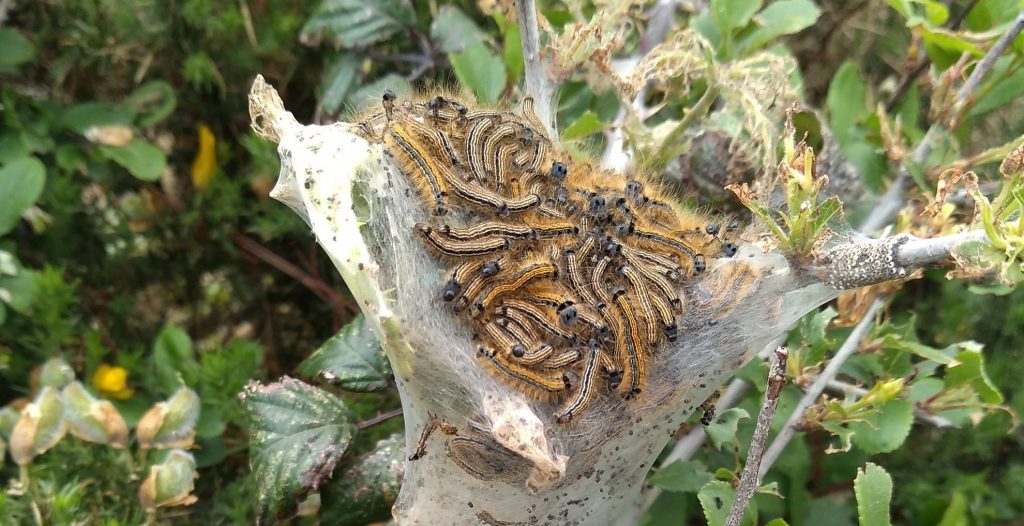
Have you seen dense webs covering hedges and wondered what kind of huge arachnid is lurking inside? I don’t want to know!! Well, good chance its not actually a spider’s web, but a caterpillar’s web!
Phew!! Read on to find out about these wriggly creatures, their weird webs, and crazy adult moths!
We’ve seen these webs in two different counties
- on our coastal walks in North Devon and
- in Shropshire hedgerows
but they actually belong to two distinct species of caterpillar. Lets take a quick look at each one separately.
THE LACKEY CATERPILLAR & MOTH – NORTH DEVON COASTS
The Lackey moth & caterpillar is common in the southern England, especially near the coast, it is frequently found on blackthorn and hawthorn hedges. They can be seen sitting in their web if they have been left undisturbed, like the ones we photographed near Westward Ho!.
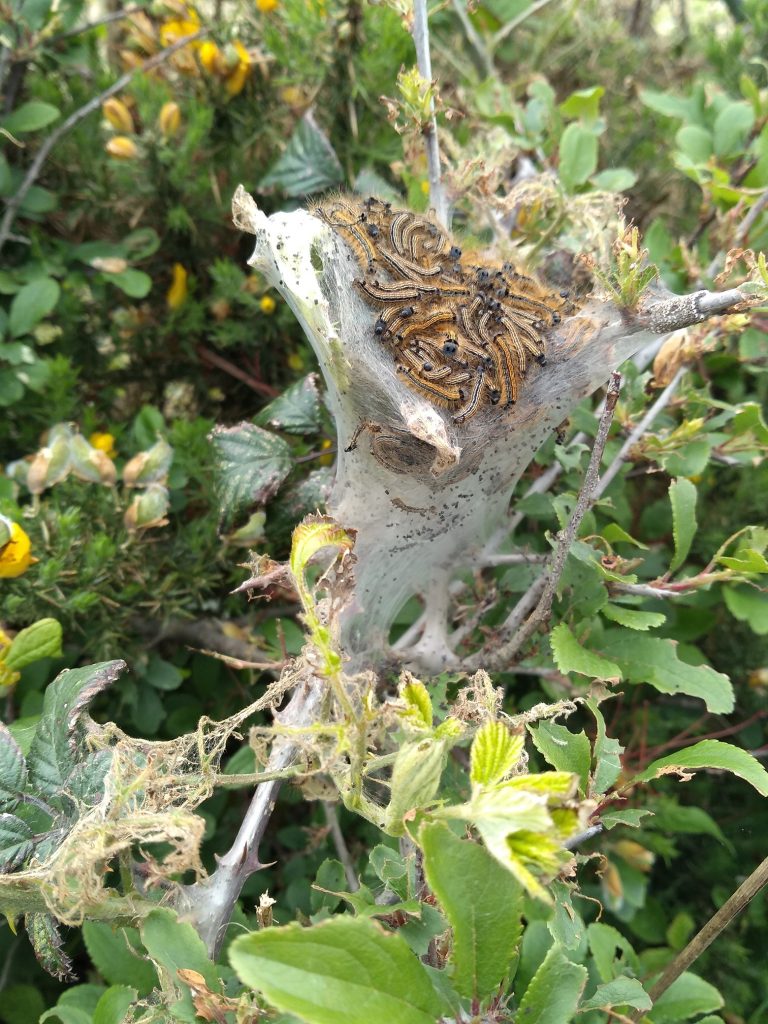
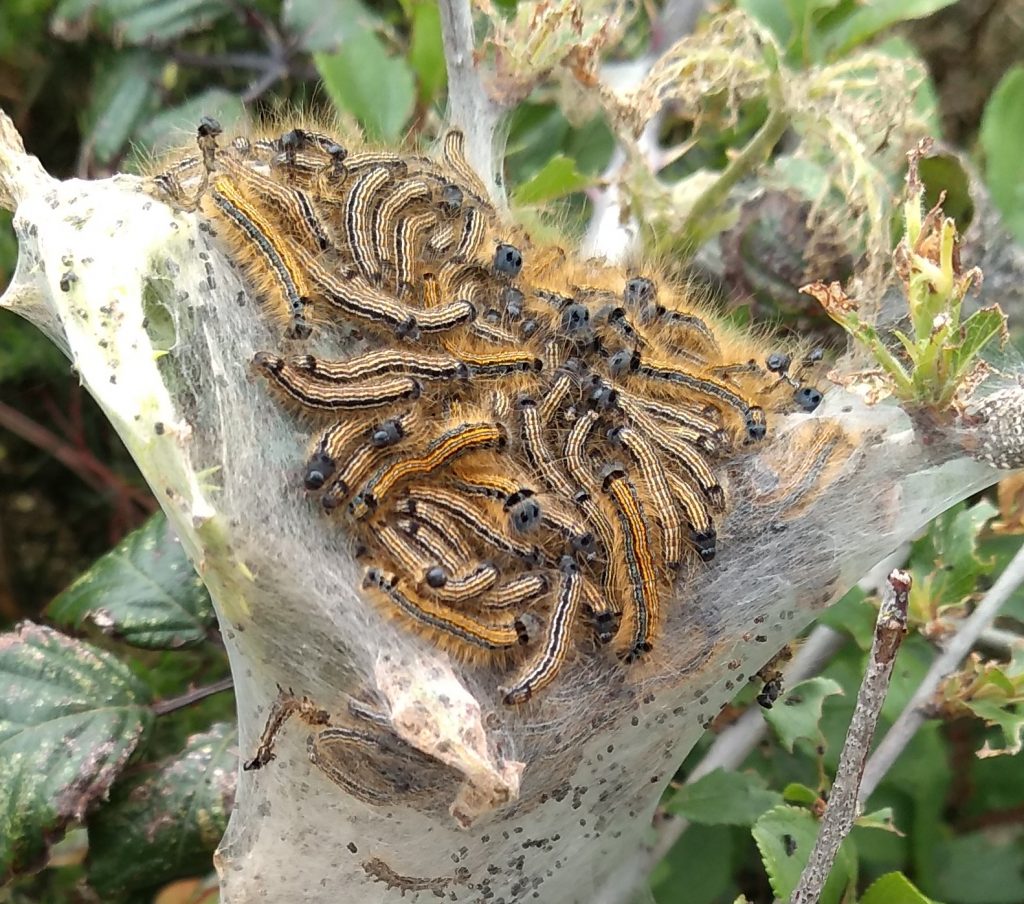
They grow to about 5cm and have blue, orange & white striped, hairy bodies. Their long hairs protect against predators and they will retreat into their web when in danger. From April to June, the caterpillars munch their way through the shrubs, spinning a silk web as they grow. When fully grown, they find a suitable place low to the ground hidden amongst plants to spin a cocoon and pupate. The adult moths emerge within a month, by July.
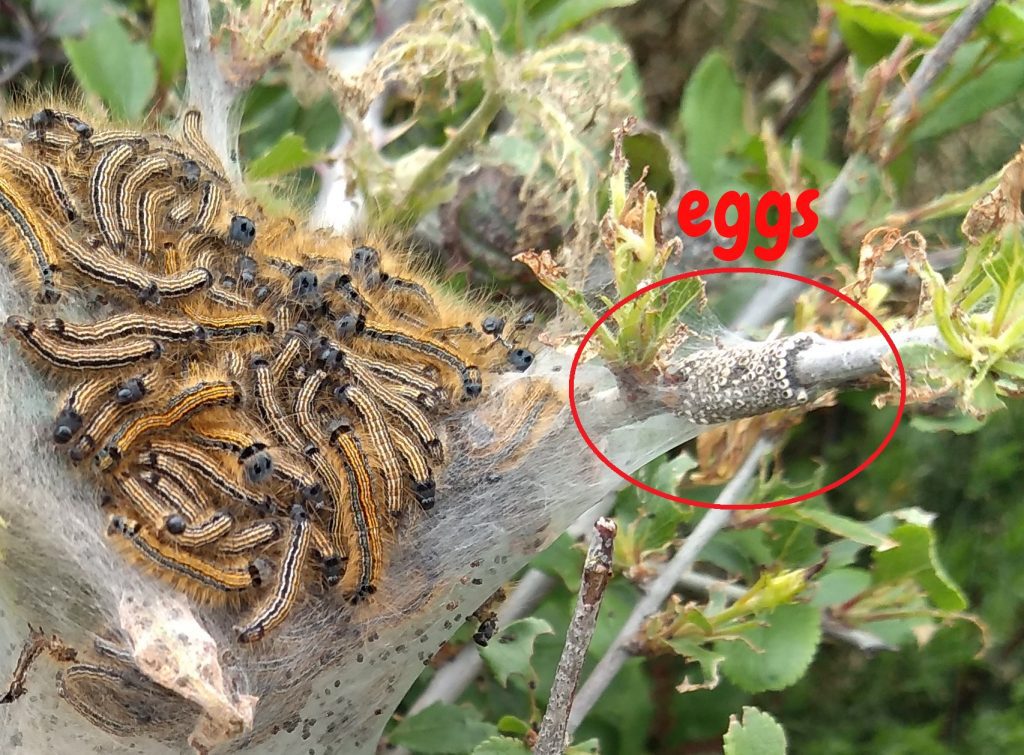
The moths are 2-3cm wide and are not as attractive as the caterpillars, being beige to brown in colour, with a furry body and large feathery antennae. To see the adult moths click here. The Lackey moth lays its eggs in neat rows on the stems of their favourite shrubs in late summer, you can see these on the right hand branch in the photos below.
The adult moths are strongly attracted to light and often fly indoors at night crashing straight into lightbulbs, and zoom around haphazardly, bumping into everything!
THE ERMINE CATERPILLAR & MOTH – SHROPSHIRE COUNTRYSIDE
The Ermine caterpillars appear in May and quickly spin these huge webs that cover shrubs and hedges. They use the webs for protection and stay together in large numbers. The webs are more extensive than the Lackey moth. The Ermine caterpillars are a similar size to the Lackey, but don’t have the distinct striped pattern and aren’t as hairy!
They feed ferociously on the foliage for about 6 weeks, then transform into the moth form. Although there are different species of Ermine moths, they are all grey or white with lots of black spots, such as the White Ermine moth, seen here.
This web was in a hedge near Ludlow in Shropshire.
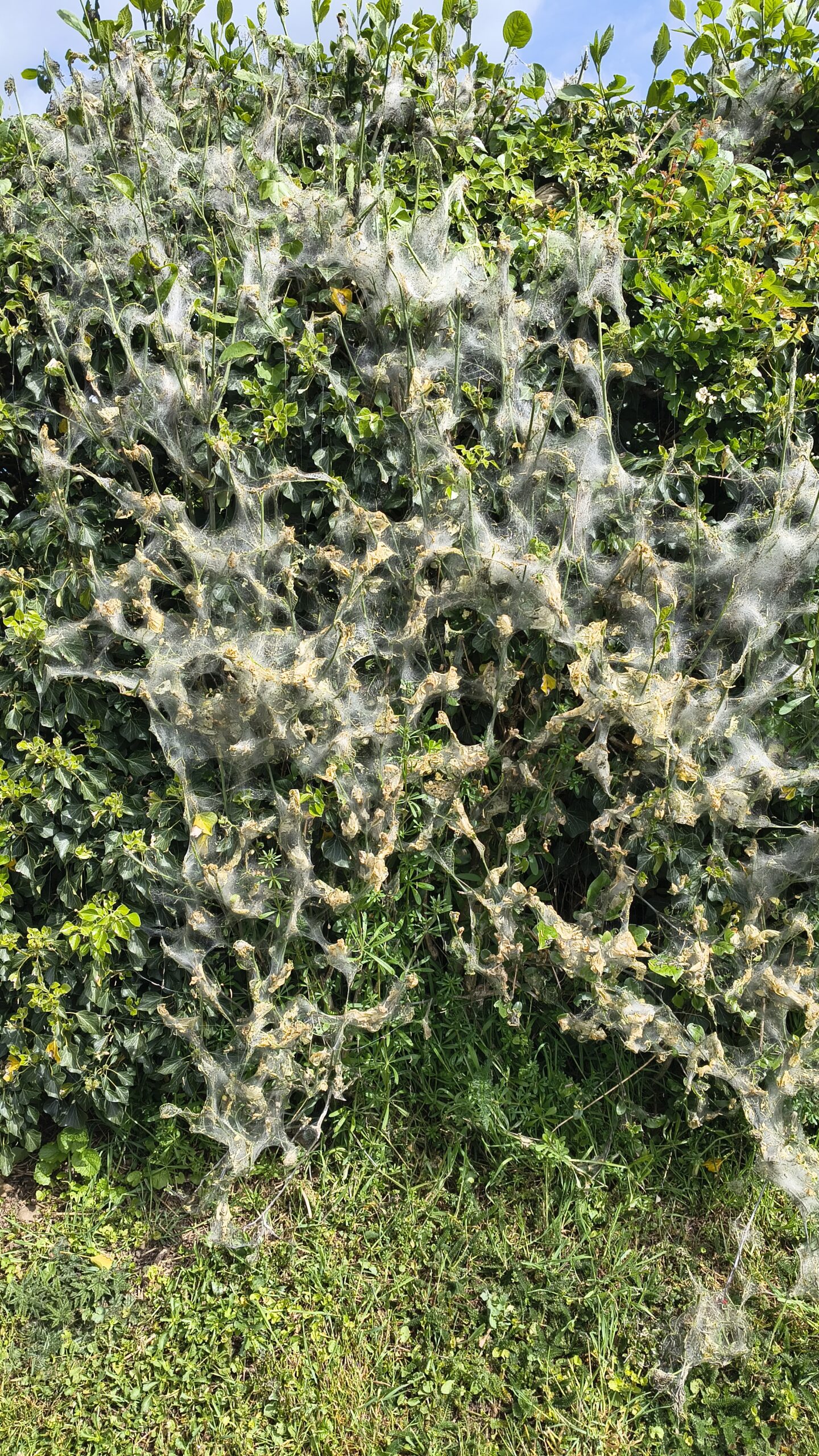
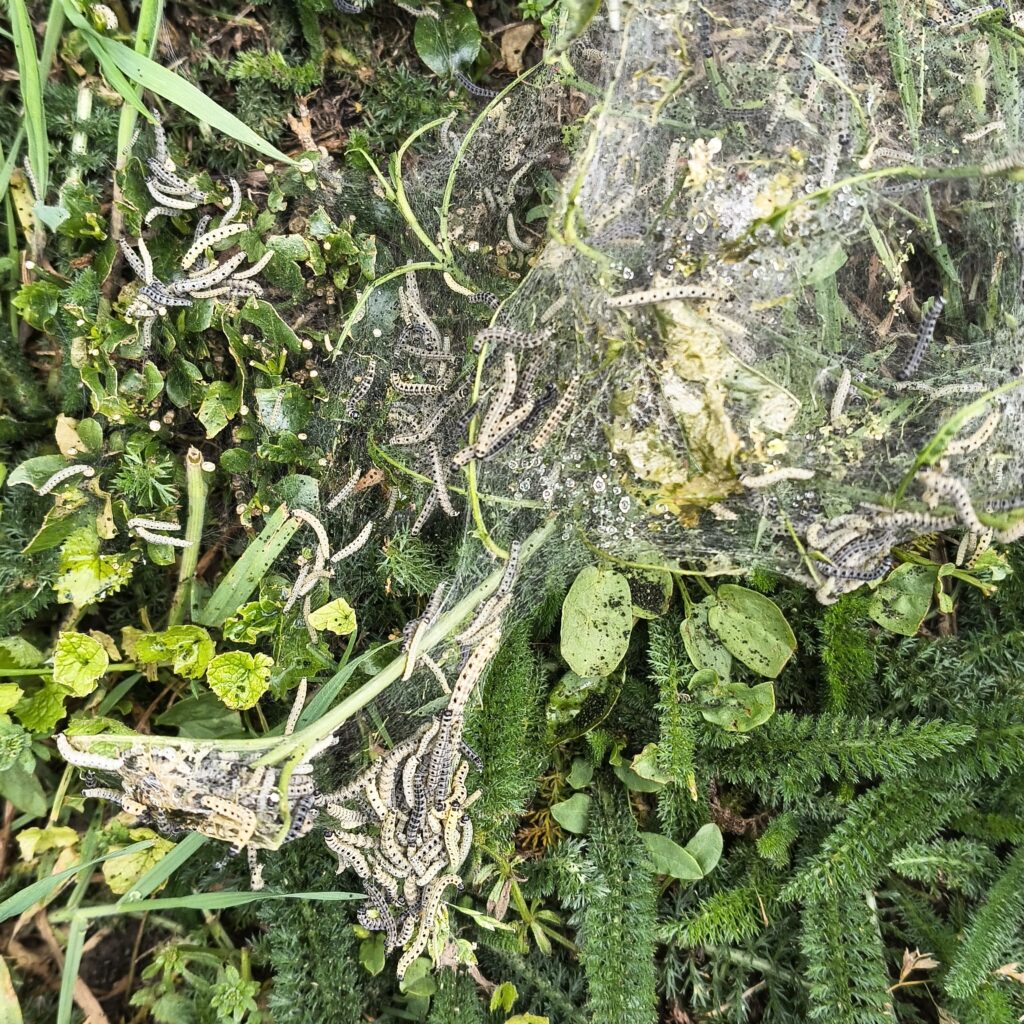
Safety in numbers!
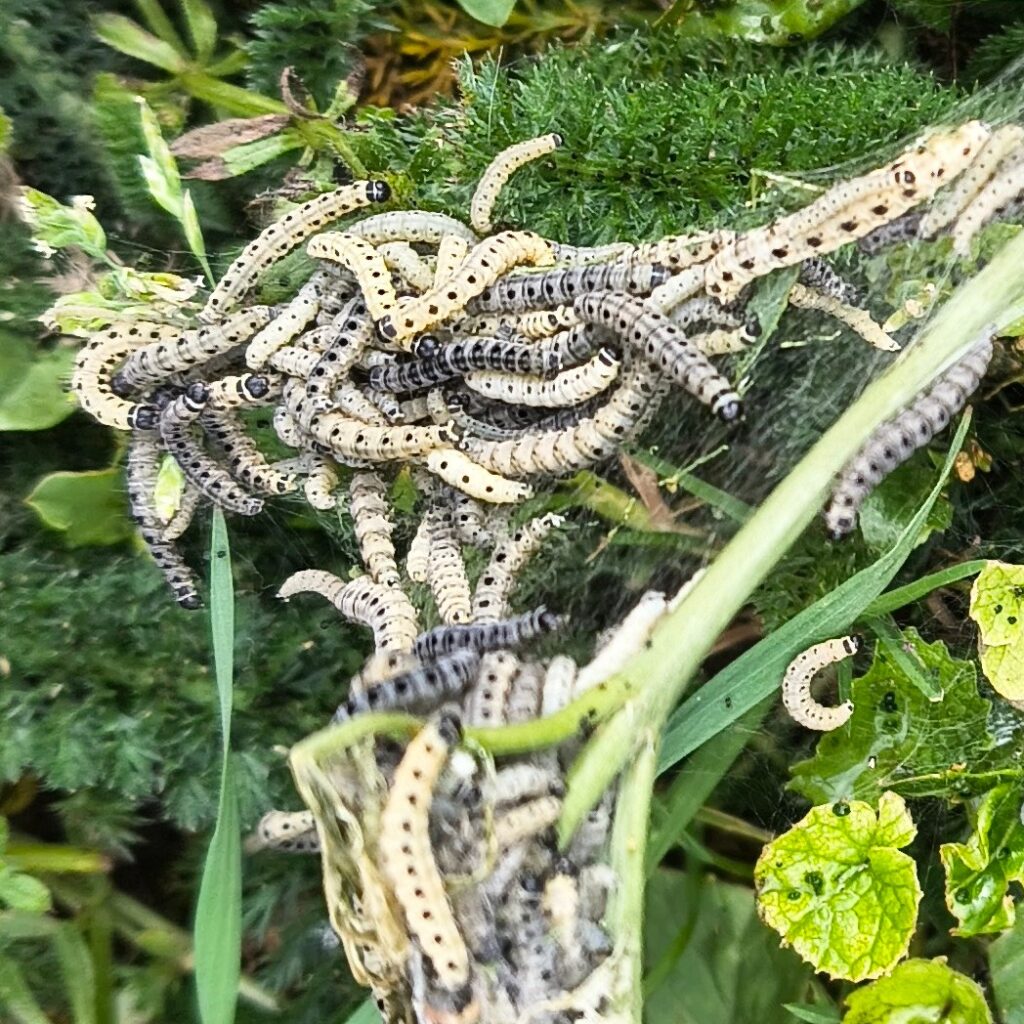
We watched the caterpillars for a while. They had pathways which they crawled down to ground level to munch on different plants. They followed each other along these webby paths, like a walking bus! They used the same path way to crawl back up, creating traffic jams! You can see them in action in my video here.
I noticed that the large webs also collected moisture as you can see here in these droplets of water. As caterpillars don’t drink water, I suspect this was not a water-capturing mechanism employed by them.
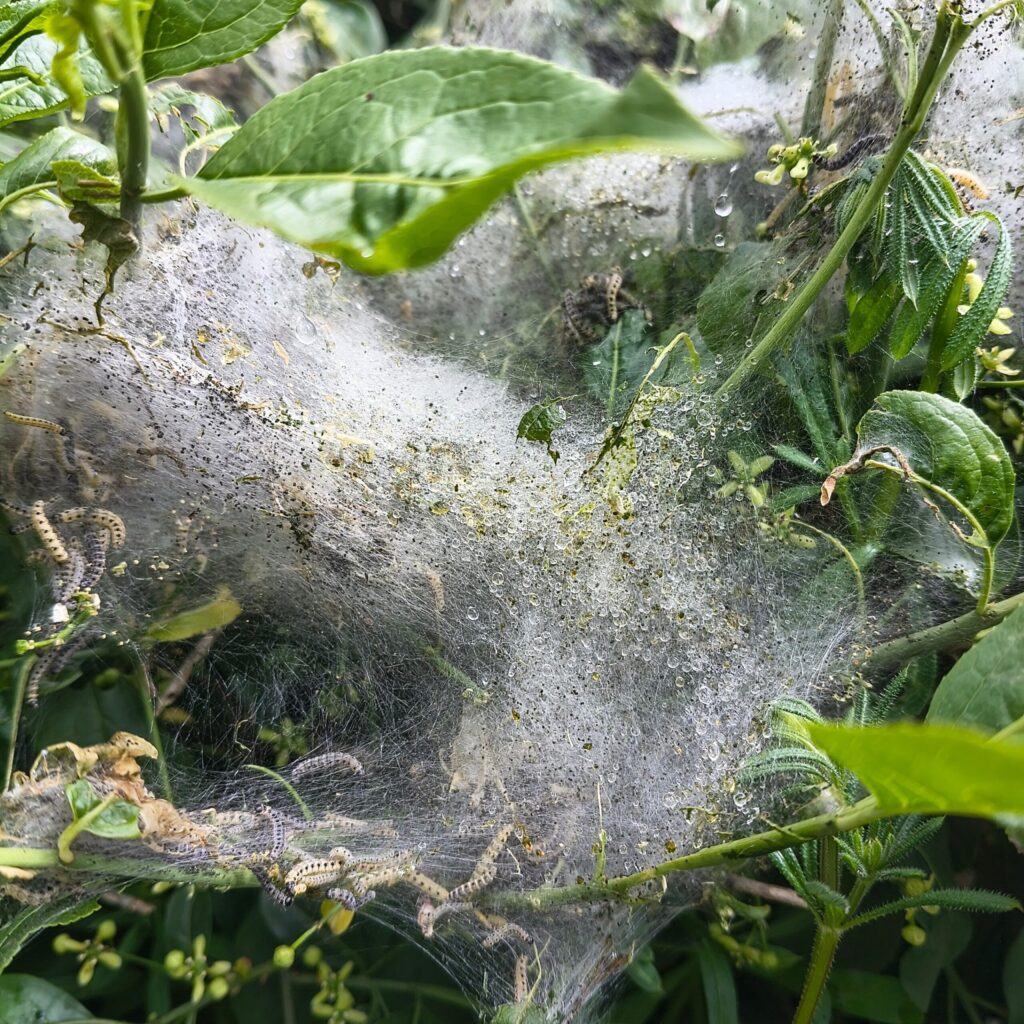
The Ermine web we found near Ludlow is very modest, check out this enormous web created by the same caterpillar on this entire tree covered in Yorkshire.
So if you come across dense webs in shrubs that look like this, do take a closer look……although I can’t guarantee what will be lurking inside!
Happy Science-ing
Ruth
Chief Scientist at Devon Science
Want easy science experiments to do at home?
Head on over to our blog find out other cool experiments such as Glowing Fluorescent Liquid or the Super Easy 6 – a free download with 6 super-easy experiments to try at home! Our shop for made to order science kits, can be found here.