Have you ever spotted a small, colourful insect flying near a pond or stream? At a glance, you might assume it to be a dragonfly, but in fact it might have been a damselfly. Here’s a few facts about these beautiful creatures and how to know if its a damselfly or a dragonfly. We zoom in on it under our microscope too, and here I share the video.
Damselflies: Tiny Wings, Wonderful Science!
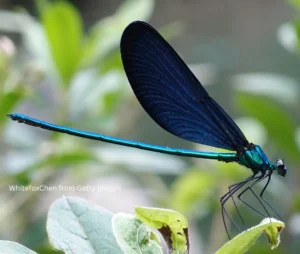
Have you ever spotted a small, colourful insect flying near a pond or stream? At a glance, you might assume it to be a dragonfly, but in fact it might have been a damselfly!
Earlier this week, we found a blue damselfly called a Beautiful Demoiselle on our windowsill. It had sadly died but we took the chance to take a closer look at this fascinating little insect under the microscope. We share our microscopic discoveries over on our social media pages, and now we’re excited to share some of the science behind this amazing creature with you.
Below is our close-up video of the blue colour of this damselfly, which isn’t a pigment, but the way the light is reflected from it.
Damselflies are small four-winged insects that have lived on Earth for more than 300 million years. Like all insects, damselflies have six legs, three body sections and an exoskeleton. Their body is divided into a head, thorax and abdomen. These delicate-looking insects are actually amazing little hunters.
Let’s discover some fun facts about them!
- Damselflies have four wings and each can move independently
Damselflies have four wings, which help them fly, hover and change direction quickly. The muscles controlling their flight allow the forewings and hindwings to move with independence. This gives them a great sense of control when flying.
The iridescence and beautiful colours of their wings are created by the intricate network of veins bending and reflecting specific wavelengths of light. Under a microscope, you’ll find an intricate network of veins and cross-veins forming hundreds of tiny sections in the membrane of their wing.
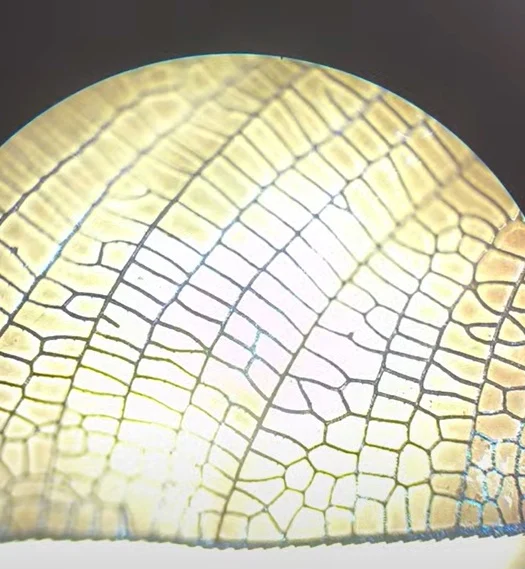
Damselfly wing under the microscope showing veins and toothed edge
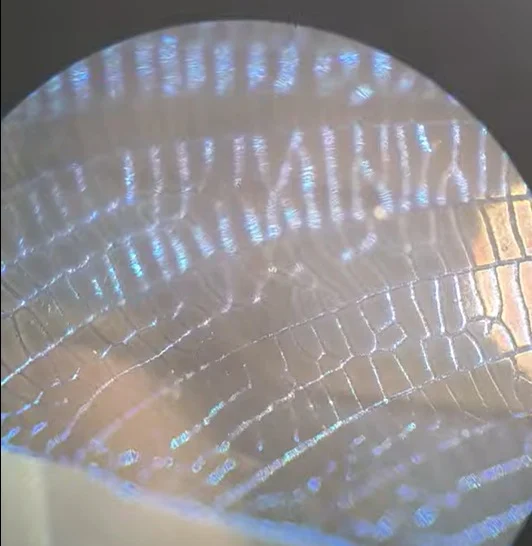
Damselfly wing under the microscope with a darkfield background to show blue colour reflecting back
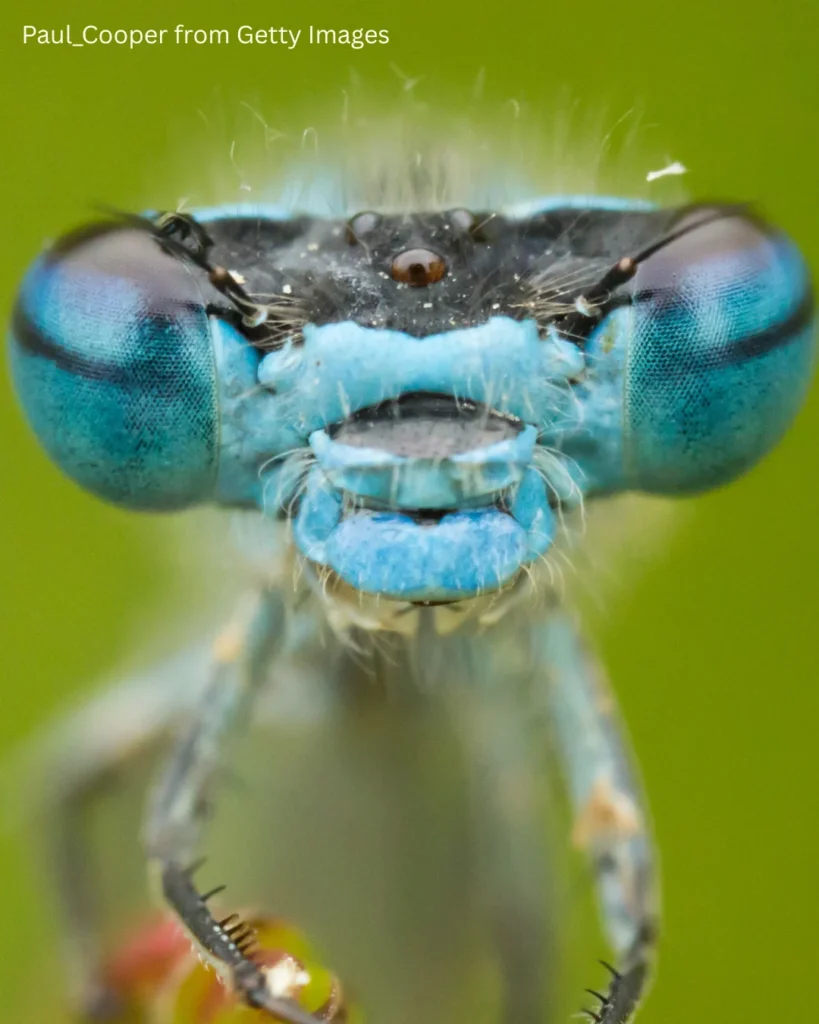
- They have huge compound eyes
A damselfly’s eyes take up a lot of its head! Their eyes are made up of thousands of hexagonal lenses called ommatidia. Each ommatidium detects light from a slightly different direction, and the brain combines all this information to create a picture of the world. This gives them an incredible field of vision, perfect for helping them spot tiny insects while they are flying.
Did you know? Damselflies can actually see in colour! Their eyes contain several types of photoreceptors, cells that respond to different wavelengths of light. Some species can even detect parts of the ultraviolet (UV) spectrum, which humans cannot see.
- They are expert hunters
Damselflies eat small insects, including mosquitoes, flies and tiny bugs. They are aerial hunters, meaning they catch their prey while flying through the air, sometimes even intercepting, by catching and carrying the insect using their six legs arranged like a basket. They then use their mandibles and labium (lower lip) to eat.
- They spend a large portion of their lives underwater
Young damselflies, called nymphs, live underwater in ponds, streams and other freshwater habitats. They can spend months or even years underwater before becoming adults. Even before they can fly, damselfly nymphs are little predators too. They hunt tiny creatures such as mosquito larvae and other aquatic animals. Interestingly, when they are nymphs, the labium is the damselfly’s secret weapon, launching and spearing any underwater prey.
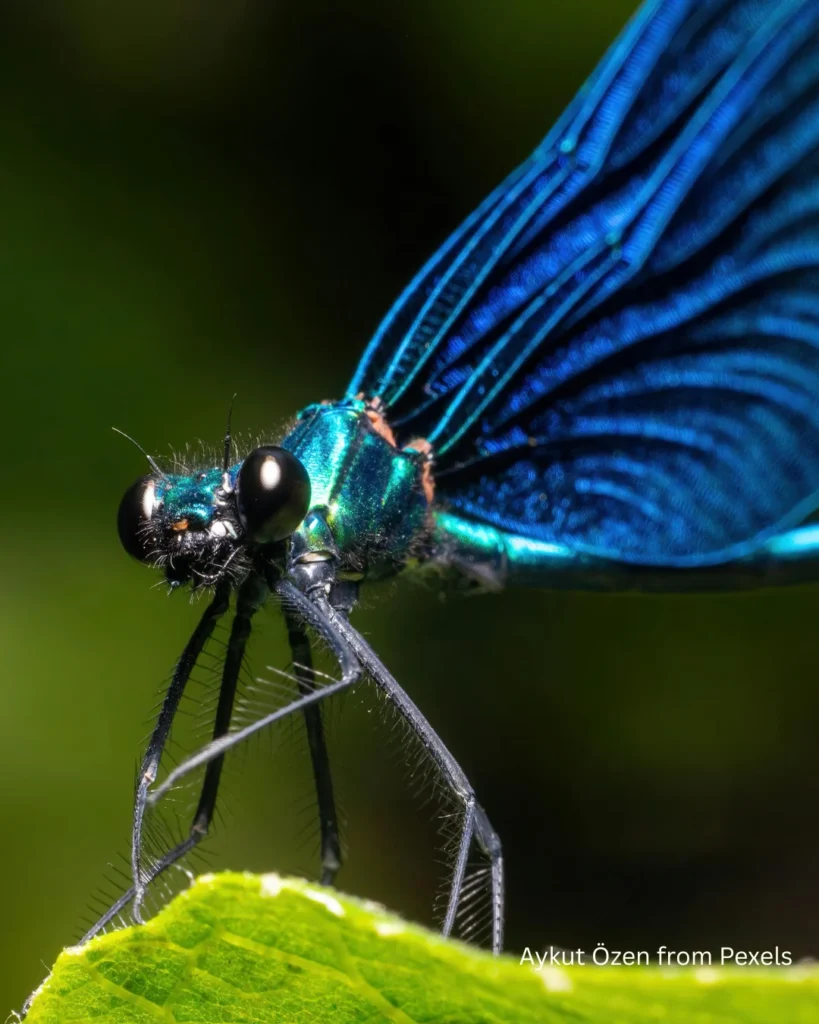
- Damselflies are related to dragonflies
Damselflies and dragonflies belong to the same insect group, Odanata. They look similar, but there is an easy way to tell them apart: when resting, damselflies usually hold their wings together above their body, while dragonflies usually keep theirs spread out. A dragonflies eyes are often larger and closer together than the damselflies, which are separated by a noticeable gap.
However, both are flying predators with four wings, huge compound eyes and aquatic young that hunt underwater. Their ‘toothed’ mouthparts help group them as cousins!
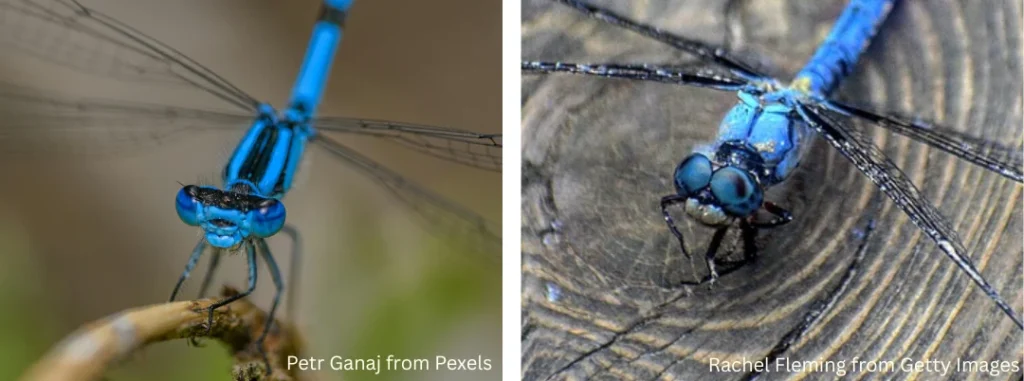
Damselfly (left) and dragonfly (right) showing that the damselfly has a noticeable gap between the eyes, whereas the dragonfly’s eye are large and touch in the middle!
Lastly, Damselflies are incredibly helpful to us.
Because damselflies eat lots of small insects, they help keep insect populations under control. They are also a sign of a healthy freshwater environment. So next time you are around a pond or stream, stop and take a closer look! You might be able to spot a damselfly, and witness for yourself the fast-flying, clever hunters that have a fascinating life both above and below the water.
Microscope workshops
If you are looking for something a bit different for your venue, school or event, you can book us for educational and fun run drop in science workshops that are focused around learning and using microscopes.
If you are a teacher, or run a group, check out our page here
Here’s a drop-in microscopy workshop that we did at the RAMM in Exeter:
To see more things close up under the microscope, check out our blog “Everyday Things to look at under the Microscope” here
We also put a Daddy Long Legs under the microscope recently too – eeek!!
Happy Science-ing
Sophie
Blogger at Devon Science
Want easy science experiments to do at home?
Head on over to our blog find out other cool experiments such as Glowing Fluorescent Liquid or the Super Easy 6 – a free download with 6 super-easy experiments to try at home! Our shop for made to order science kits, can be found here.